
Looking Closer at Chronic Cough
In patients living with idiopathic pulmonary fibrosis (IPF) and other non-IPF interstitial lung diseases (non-IPF ILDs), chronic cough can be the result of how the brain, lungs, and nerves work together to respond to stimuli.
Chronic cough can be a result of how signals are processed, not just what is happening in the lungs
Chronic cough in IPF and ILD may result from:
- Changes in lung structure and function1,2
- Increased sensitivity of airway nerves3-6
- Amplified processing of signals in the brain7,8
- Decreased cough suppression7,8
These factors can contribute to a cough that is:
- Frequent
- Difficult to control
- Triggered by everyday activities
Cough is mediated by communication between the central and peripheral nervous systems9
Cough is driven by signals traveling between:
- The lungs (where stimuli are detected)
- The vagal sensory nerves (which carries signals)
- The brain and brainstem (which evokes or suppresses cough)
When airway nerves detect a stimulus, signals are sent to the brain where they are processed and translated into the urge and physical act of coughing.
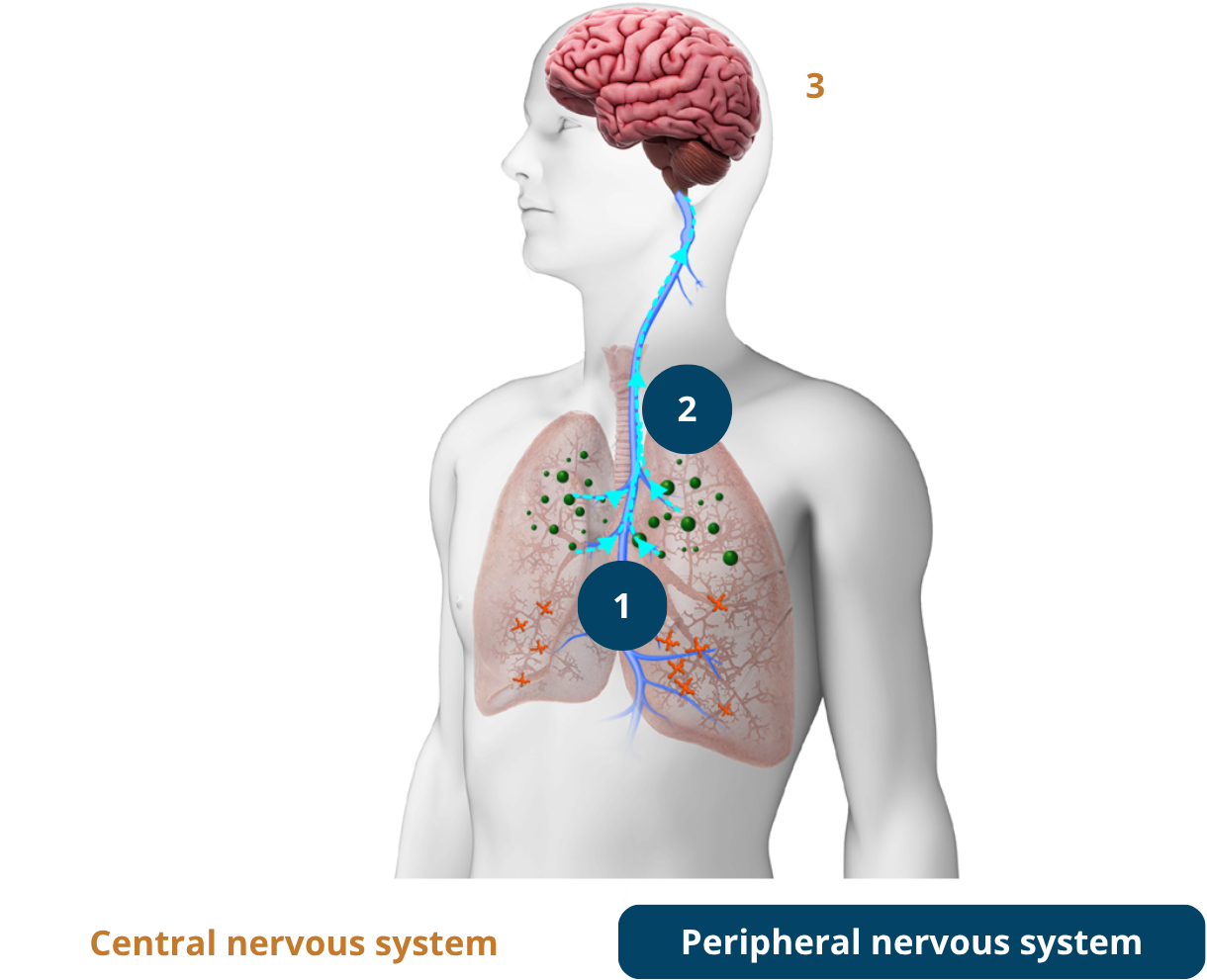
In patients with chronic cough, the cough signaling pathway may become overactive5, 10-12
Nerve signals may become overactive due to sensitization of cough signaling pathways, known as cough hypersensitivity.
This can mean:
- An increased cough response to normal or low-level stimuli
- The urge to cough is triggered more easily
- The ability to suppress cough may be reduced
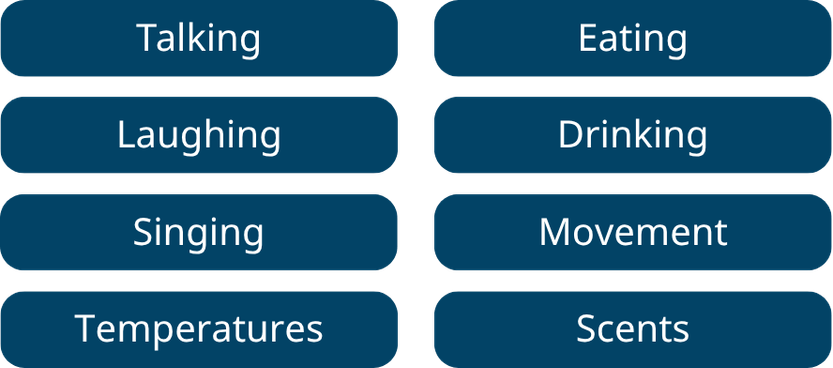
Cough hypersensitivity causes an increased cough response to everyday activities including:
References
- Sgalla G et al. Respiratory Research. 2018. doi: 10.1186/s12931-018-0730-2
- Green R et al. Respir Res. 2024 doi: 10.1186/s12931-024-02897-w
- Lim C. Y. et al. Journal of Clinical Medicine. 2025 doi: 10.3390/jcm14010291
- Chung K et al. Lung. 2022 doi: 10.1007/s00408-022-00589-0
- Singh N. et al. Journal of thoracic disease. 2020 doi: 10.21037/jtd-2020-icc-007
- Hirons B et al. Thorax. 2023 doi: 10.1136/thorax-2023-BTSabstracts.362
- Ando A. et al. Thorax. 2016 doi: 10.1136/thoraxjnl-2015-207425
- Lu H & Cao P. Neuroscience Bulletin. 2023 doi: 10.1007/s12264-023-01104-y
- Chung KF et al. Nat Rev Dis Primers. 2022 doi: 10.1038/s41572-022-00370-w
- Birring SS et al. Lung. 2025;203(1):1-8.
- Haji A & Ohi Y. Neuroscience. 2010;169(3):1168-1177.
- Vigeland CL et al. Respir Med. 2017;123:98-104.